

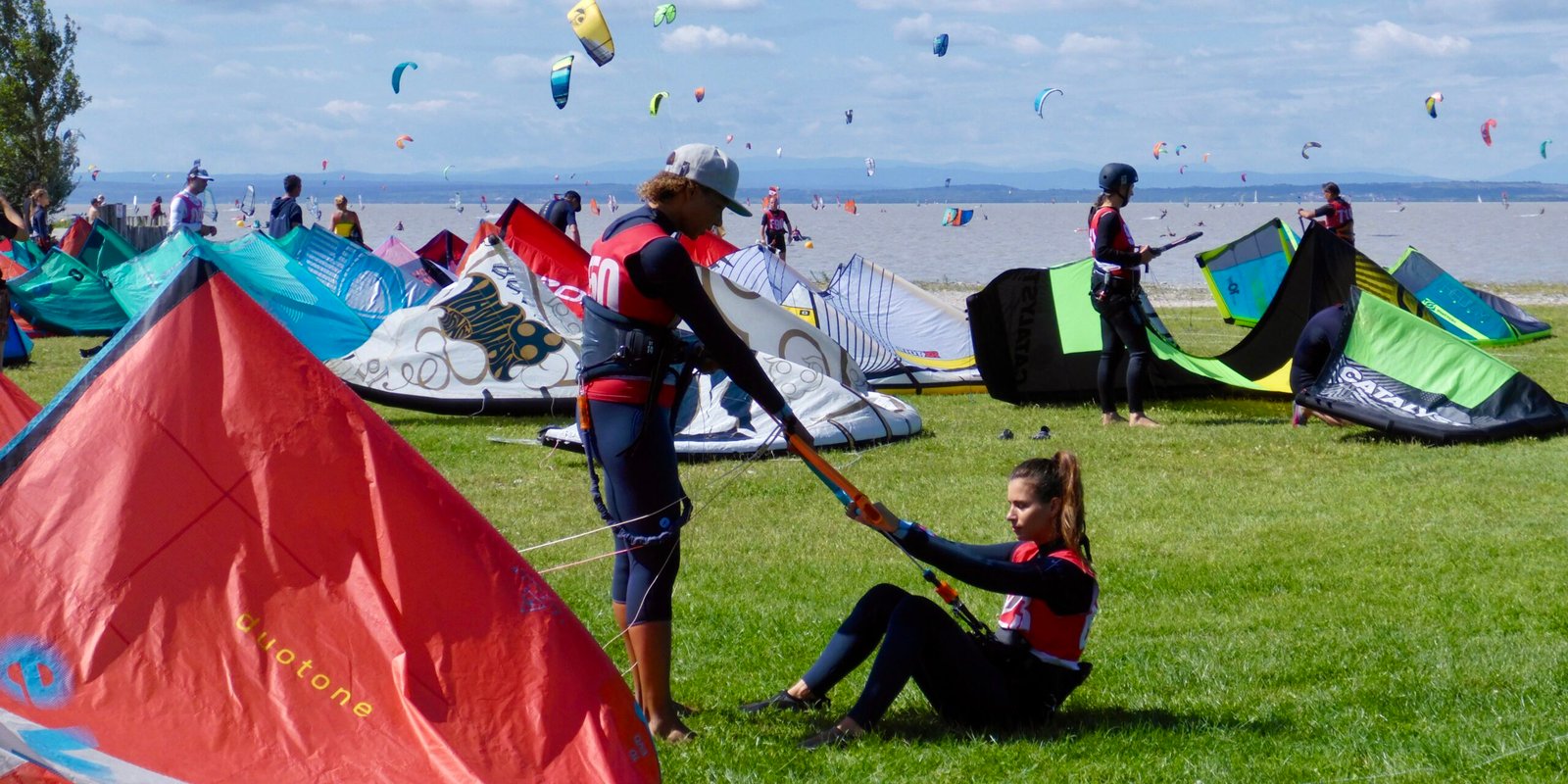
If you want to enter kitesurfing, start your kitesurfing lessons with a certified school or instructor. A beginner course covers all basics. You can still prepare on your own and speed up your early progress.
Kitesurfing has two parts
• kite handling
• board handling
You can train both before your first session.
Kite handling
If you have used a stunt kite before, you hold a clear advantage. Anyone who can fly simple patterns gets the training kite under control with little explanation.
If you never touched one, buy a low cost stunt kite from a sports store. At Decathlon they start at € 20. Practice steady figure eights. This builds clean hand control and gives you a better start during the course.
Paraglider pilots usually adjust fast. The movements feel familiar and they understand how a wing reacts.
Divers often learn fast as well. They work with controlled movements and stay focused. That mindset helps during the first steps with a kite.
Windsurfers should enter with a clean slate. The only real transfer is wind awareness. The boom habit can slow you down. Windsurfers and wakeboarders tend to pull hard with the arms. In kitesurfing the bar only steers the kite. The harness takes the load. You need to unlearn the use of strength.
Board handling
Any board sport helps
• wakeboard
• snowboard
• skateboard
If you ride one of them with confidence, the kiteboard feels more familiar.
If you only ski, train stance first. Your legs must accept a front foot and a back foot. Without this, water starts turn into repeated falls.
Get a simple board on wheels. A stable longboard works well for beginners. A surfskate might be fun too if you are a bit more experienced.
If winter is close, try snowboarding. Protection helps during early falls.
If summer is close, visit a cable park. If you can ride a full lap on a wakeboard, the first steps on a kiteboard get much easier.
Combining kite and board
The real test is the water start. If your focus stays on the board and the kite drifts, it drops. If your focus stays on the kite and your legs freeze, you fall forward or backward.
Training both skills on land builds
• clean kite feedback without looking up
• stable board stance without overthinking
Anything you build on land reduces workload in the water.
What to expect from a beginner course
A solid outcome is
• stand up
• ride at least 50 meters
• stop in a controlled way
At this point you can train alone. For steps like riding upwind or clean transitions, extra coaching helps. It prevents slow progress and bad habits.
There is no fixed timeline. Some learn fast in steady wind. Younger riders often reach an independent level in about five hours. Older riders with ski background need more time. Age does not block progress. I once worked with a 76-year-old who reached a steady ride.
Final notes
Start land training early. Plan your course outside the weakest wind periods in summer. If you want advice or a course date, contact me early. The number of students per season is limited due to wind conditions.